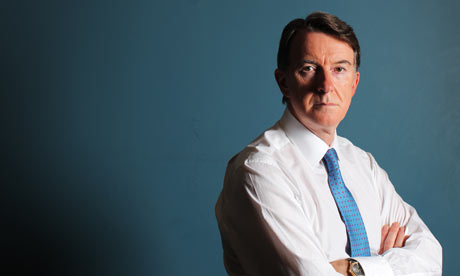
Peter Mandelson is about to publish his political memoirs, but they are unlikely to tell the full story of the politician’s business dealings. Andrew Gilligan and Adrian Gatton investigate.
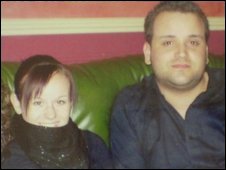
The tale of a modern-day Svengali. Nineteen-year-old Oxford jewellery shop assistant Leanne McCarthy found herself trapped in a modern nightmare of kidnap, fear and mind control when she met 23-year-old Wayne Gouveia, a sophisticated conman with a track record of duping young women.
Wayne, who worked in a whisky shop in the same street, swept Leanne off her feet on several lavish dates and they started a relationship. He then set out to cleverly and meticulously convince Leanne he was an MI5 agent, assigned to protect her shop from a ruthless gang of jewel thieves.
The couple embarked on a year of madness involving late-night stake-outs, car chases, safe-houses, narrow escapes from the gang and, in between, going to flashy hotels and on glamorous trips abroad.
But Leanne’s doubts about Wayne grew as their adventures got darker and his behaviour became increasingly controlling. As she was driven to the brink of madness, getting away from him became a matter of survival.
Wayne, it turned out, was one of Britain’s most disturbing hoaxers. In March 2009, he was finally jailed after conning Leanne out of thousands of pounds.
In this moving and disturbing First Cut film, Leanne revisits the places and relives the memories where her bizarre adventures took place.
Producer/Director: Adrian Gatton
Executive Producer: Helen Littleboy
“Here is a good movie plot: a pudgy-faced, innocent looking fantasist spins a web of deception. But My Boyfriend the MI5 Hoaxer is true…Wayne Gouveia emerges as a sinister manipulator who brainwashed his victim into paralysed, nightmarish compliance” – – Financial Times
“Extraordinary, all of it, and fascinating” – Sam Wollaston, Guardian
“Adrian Gatton’s First Cut film offers a stark warning about the power of sophisticated conmen through the staggering story of Leanne McCarthy.” – Mail on Sunday
In August 2008, a devastating fire raged at a Shropshire mansion. As the flames engulfed Osbaston House, mystery surrounded the disappearance of Christopher Foster, his wife Jill and 15-year-old daughter Kirstie.
What started out as a fire became a double-murder, suicide and arson investigation that would shock Britain. As vital evidence went up in smoke before their eyes, the police were faced with a number of conspiracy theories and a frenzy of press speculation about the Fosters’ fate.
With exclusive access to the West Mercia police’s painstaking investigation and interviews with close friends and family members, The Millionaire and the Murder Mansion charts the complex jigsaw puzzle involving pathologists, forensic anthropologists, and arson, ballistics and CCTV specialists.
Interspersed with the detailed investigation are the emotional interviews with family members and friends who provide an insight into the dark secrets and many sides of the apparently doting husband and father who committed this horrific crime.
Producer: Adrian Gatton
Director: Nick Poyntz
Executive Producers: Roger Graef, Eve Kay
The is a Films of Record programme for Channel 4. See the British Film Institute film & TV database entry for this programme here.
Reporter Simon Boazman investigates how much information is held on him, whether its secure and if he can reduce his data trail.
He crosses the UK to discover on the way how his mobile phone, his laptop and his car give up his secrets, how his hospital records are not completely confidential and even his child is about to become a number on a Government database.
Producer/Director: Jane Fellner
Producer (Development): Adrian Gatton
By Adrian Gatton and Robert Mendick
24 October 2008
Evening Standard (London)
BUSINESS secretary Lord Mandelson’s relationship with the Russian oligarch at the centre of the “yachtgate” scandal is detailed in secret government intelligence files, the Evening Standard can reveal.
A source has told the Standard that Lord Mandelson’s name features repeatedly in files held on Oleg Deripaska. The revelation will strengthen demands for Lord Mandelson to disclose all meetings and dealings with Mr Deripaska, Russia’s richest man.
The references to Lord Mandelson appear in files contained on a massive, covert joint intelligence database called Scope. Scope allows MI5, MI6, GCHQ and the Joint Terrorism Analysis Centre to communicate with each other more quickly and securely than before. It enables the agencies to call up the latest intelligence within 15 minutes.
A source told the Standard: “Peter Mandelson appears in the Scope database. His name appears repeatedly in connection with the business dealings of Oleg Deripaska.”
There is no suggestion that there is a file specifically devoted to Lord Mandelson nor that he has acted improperly in meeting Mr Deripaska. UK intelligence agencies opened a file on Mr Deripaska following a series of claims over his alleged links to organised crime in Russia. US authorities are also said to be concerned about Mr Deripaska’s dealings.
The oligarch is banned from entering the US. At the request of the FBi in 2006, the US authorities revoked his visa and, despite lobbying, Mr Deripaska has failed to get it reinstated.
Mr Deripaska has never been convicted of any crime and denies all wrongdoing including any ties to organised crime. He insists his US ban is purely a bureaucratic error. Liberal Democrat MP Norman Baker, who has tabled questions in the Commons asking if the British authorities were aware of US concerns when issuing Mr Deripaska a visa, said today: “There are now a series of questions that need answering over Lord Mandelson’s relationship with Mr Deripaska.”
It emerged today that Lord Mandelson and Mr Deripaska have known each other since at least 2004 – two years earlier than previously thought – when the two men were spotted dining in Moscow. Lord Mandelson had just been appointed a European Commissioner but had yet to take up the post. Lord Mandelson, appointed Business Secretary this month, has always insisted there was no conflict of interest in his friendship with Mr Deripaska. As European trade commissioner, he made decisions that may have had a direct impact on Mr Deripaska’s business dealings, mainly in aluminium in which he made his fortune.
This week hedge fund manager Nat Rothschild, a friend of both Lord Mandelson and Mr Deripaska, wrote a letter to The Times suggesting Tory shadow chancellor George Osborne had attempted to “solicit a donation” from the oligarch during a meeting on the Russian’s yacht, moored off Corfu.
The result was to turn attention to Mr Osborne’s dealings with Mr Deripaska. Mr Rothschild, the millionaire financier and scion of the Rothschild banking dynasty, has been working strategically since 2005 to help Mr Deripaska’s aluminium company Basic Element get a listing on a major stock exchange.
Mr Deripaska is convinced he is being smeared by Russian rivals. A source said: “There are a lot things flying around to blacken Mr Deripaska’s name. Claims about security service files cannot be proved one way or the other.”
No one at the business department was available for comment.
The story of Tania Head’s escape from the Twin Towers captivated America and made her a heroine among survivors. Just one problem – she wasn’t even there that day.
During the years following the 9/11 attacks, many stories emerged of triumph, tragedy and heroism. But one story stood out. Tania Head was one of only 19 people to survive above the point of impact in the South Tower at the World Trade Centre.
Her story was triumphant and tragic. She was a survivor who, despite horrific burns, had escaped the falling towers, but she was a victim, too, in that she lost her fiance, Dave, when the North Tower collapsed.
As Tania Head became president of the self-help group, the World Trade Centre Survivors’ Network, her vivid account of miraculous escape and tragic loss convinced everyone – politicians, media, fellow survivors and the families of those who died in the attacks.
But Tania wasn’t who she said she was. And on the day of the attacks she wasn’t even in New York; she was thousands of miles away in Spain, sitting down to lectures at a business school in Barcelona, where she was completing a masters in business administration at one of Europe’s most prestigious – and expensive – business schools.
Her fellow students went on to work in industry, but in 2003, Tania Head, a member of one of Barcelona’s richest families, flew to New York to adopt her carefully studied persona as a victim of the 9/11 terrorist attacks.
But why did she do it? To get the answers I had to search across the U.S., Spain and even Switzerland for clues.
I quickly found that many doors in New York were shut, but I found copies of her copious emails and writings.
The answer to Tania’s hoax appeared to lie in her own past, a mysterious arm injury and her almost professional pride in fulfilling her role successfully.
But, more disturbingly, she took advantage of the culture of 9/11, in a so-called ‘hierarchy of suffering’ that built up among the survivors …
Read the full article in the Daily Mail here. A version of this article was also published in the Herald Sun newspaper in Melbourne, Australia, see the piece here.
The 9/11 Faker
11 September 2008
Cutting Edge
on Channel 4
This programme tells the extraordinary story of Tania Head, one of the world’s most audacious fakers.
In the years following the 9/11 attacks, many stories emerged of triumph, tragedy and heroism. But one story stood out. Tania Head, one of only 19 people at or above the point of impact to survive, who also lost her fiancé in the attacks.
As Tania Head became President of the World Trade Centre Survivors Network, Tania’s vivid account of miraculous escape and tragic loss convinced everyone – politicians, press, fellow survivors and the families of those who died in the attacks. But Tania wasn’t who she said she was. And on the day of the attacks she wasn’t even in New York; she was thousands of miles away in Spain.
When she joined the 9/11 Survivors Network, Tania Head impressed her fellow survivors with how well she seemed to be coping. Within months of joining she had helped the network to get official status, secured state funding and asked a trauma expert to lead therapy sessions. She even supported the organisation with her own money and, in 2004, arranged the first survivors’ visit to Ground Zero.
Barbara Conrad, a former member of the Survivors Network, recalls that, at meetings, “she would walk in and barely make it to her seat because she’d be surrounded, almost by fans”.
No one questioned Tania, even when there seemed to be small inconsistencies in her version of events. Was the man she lost her fiancé or her husband? Why did a man in a red bandana – known to have saved the lives of many others that day – only appear in later versions of her story?
But, as her fame grew, so, finally, did the questions. In September 2007, the New York Times published a front page article questioning Tania’s account. Shortly afterwards, she packed her bags and disappeared.
So who was Tania Head? And how did her deception affect the members of the 9/11 Survivors Network she left behind?
Speaking to traumatised survivors, the therapist who treated her and the family of the dead hero she claimed saved her life; The 9/11 Faker tells the intriguing story of how Tania Head became 9/11’s most famous living face – and how she was exposed as one of the world’s most notorious fakers.
The 9/11 Faker is an independent production for Channel 4 by Films of Record.
Director: James Bluemel
Producer: Adrian Gatton
Executive Producer: Helen Littleboy
“compelling and shocking … this was a great documentary: gripping and mysterious” – The Times “absorbing film … a staggering – and commendably unsensational – reflection on delusion, ambition and cynicism” – The Guardian (The Guide) “[a] solemn, intelligent documentary …” – The Guardian “[a] sad, gripping documentary” – The Daily Mail “a truly fascinating programme” – The Daily Star “[a] fascinating story of deception and intrigue” – The Daily Record
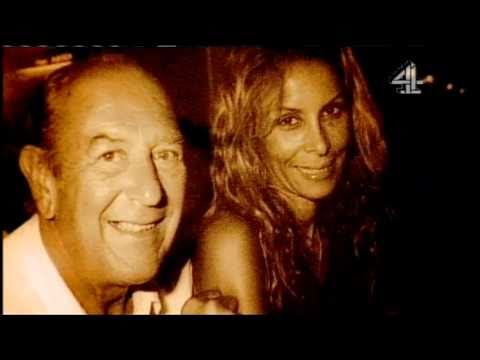
When Anthony Ashley-Cooper, the 10th Earl of Shaftesbury, went missing from his luxury hotel in Cannes on 5 November 2004, it inspired a press frenzy that exposed a frothy mix of glamour, vice, drink, drugs and fallen aristocracy.
The press exposed the lifestyle of the 66-year old earl – ‘Atty’ to his friends – who held one of the most distinguished lineages in the country, but who had become an ageing, sex-obsessed adventurer, whose wayward life created passion and jealousy in his many lovers, and eventually a vicious rivalry that led to the Earl’s sudden death.
This film tells the extraordinary story of the Earl’s downfall – his transformation from the Eton-educated millionaire philanthropist, patron of the Owl Trust and heir to the great social reformer Lord Shaftesbury – into a medallion-wearing lothario with an insatiable appetite for young women who became lured into the ruthless demi-monde of ‘hostess bars’ on the French Riviera.
Who Killed the Playboy Earl is an independent production for Channel 4 by Blast! Films. The British Film Institute Film & TV Database entry for this programme is here.
Director: Robert Davis
Producer: Adrian Gatton
Executive Producer: Grant McKee
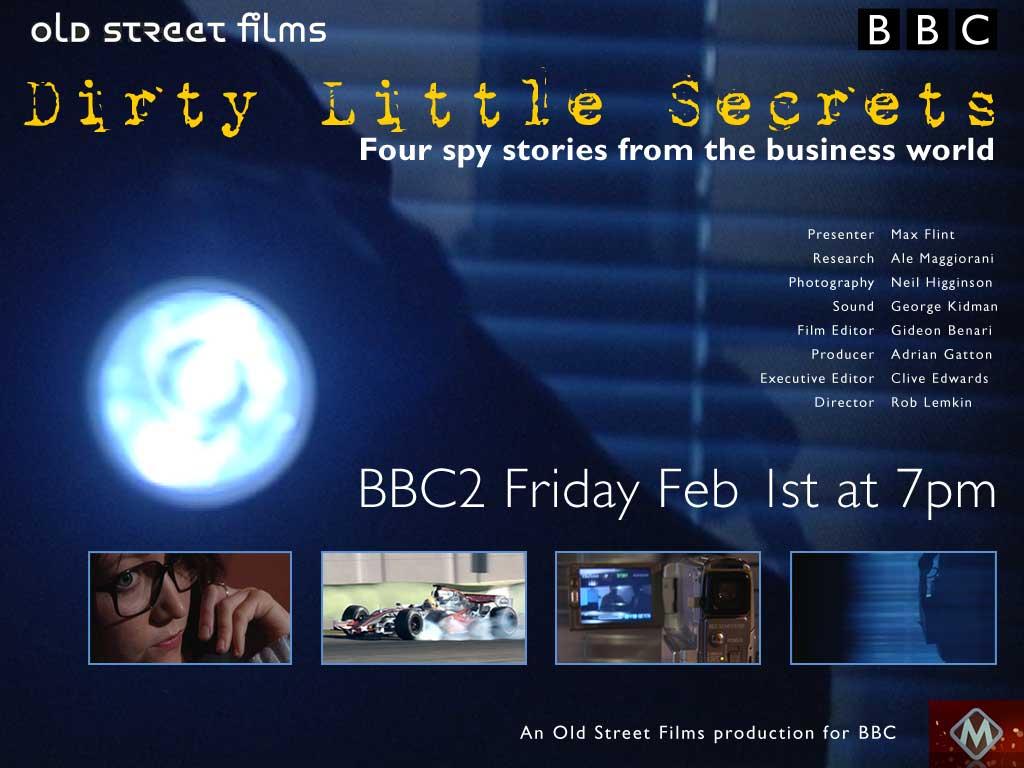
The temptation to gain an illegal advantage on your business competitors has never been higher. Companies now routinely employ private detectives to find out just what their competitors are up to.
In the first programme of a new series, the Money Programme’s Max Flint lifts the lid on a murky world of phone taps, secret filming, break-ins and deception – all in search of a profit.
Last year Formula 1 team, McLaren, was fined £50 million after it received details of a rival car’s design.
But The Money Programme discovers that far from the glamour of F1, many other businesses are also relying on dirty tricks to give them that extra advantage. The programme investigates competitive spying in businesses as mundane as the conservatory industry. And it explores in-depth how a waste tycoon Adrian Kirby ordered corrupt London-based private detective firm Active Investigation Service (AIS) to bug the phones and hack into the emails of opponents. And reveals the methods of blaggers such as Sharon Anderson who use ‘social engineering’ techniques to access commercially sensitive information.
Dirty Little Secrets is an Old Street Films production for BBC2 Money Programme. Read about the programme here.
Producer: Adrian Gatton
Director: Rob Lemkin
Executive Editor: Clive Edwards
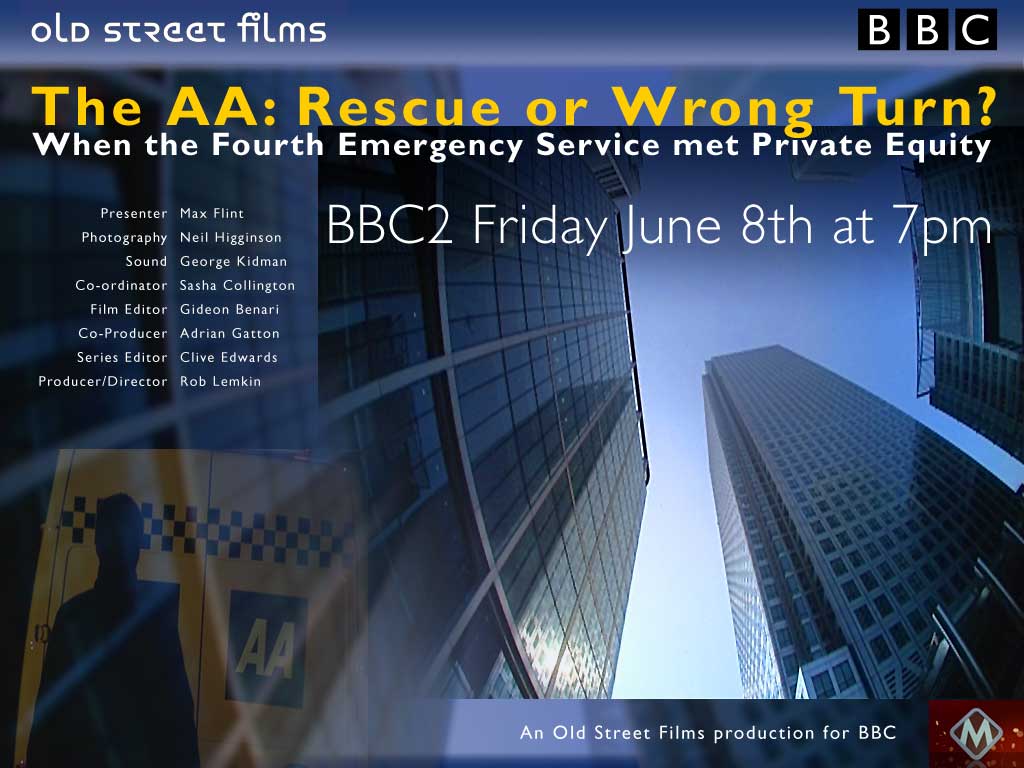
As private equity firms set their sights on bigger and bigger targets – including high-street favourites like Boots – the Money Programme looks at the City’s new whizz kids and one of the most controversial business practices of recent times. The film examines the buy-out of the Automobile Association (AA) and asks whether private equity investors are saving or savaging this national institution.
Read an article about the programme here. The AA: Rescue or Wrong Turn? is an Old Street Films production for The Money Programme.
Co-Producer: Adrian Gatton
Producer/Director: Rob Lemkin
Executive Producer: Clive Edwards





 Adrian Gatton