The Aristo, a Workers’ Revolt and the Missing Millions
By Keith Dovkants and Adrian Gatton
19 February 2007
Evening Standard (London)
The free-spending British heir to an ancient title is under investigation in Germany over a company he acquired

The Aristo, a Workers’ Revolt and the Missing Millions
By Keith Dovkants and Adrian Gatton
19 February 2007
Evening Standard (London)
The free-spending British heir to an ancient title is under investigation in Germany over a company he acquired
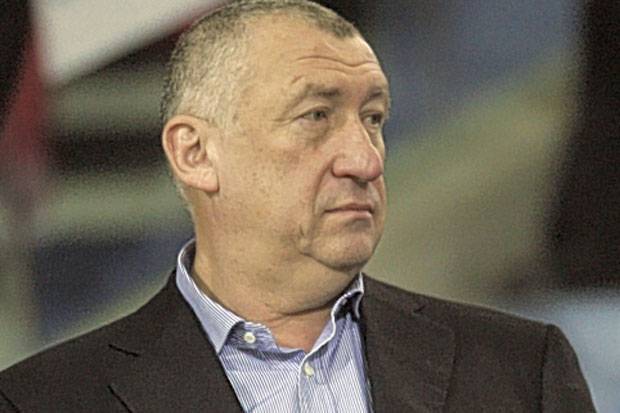
Is the charming Mr Cherney just one oligarch too far?
By Keith Dovkants and Adrian Gatton
6 December 2006
Evening Standard (London)
Banned from the US, dogged by Russian mafia rumours and facing fraud charges, this is the billionaire eyeing a mansion in London and a Premiership football club.
Read the article here.
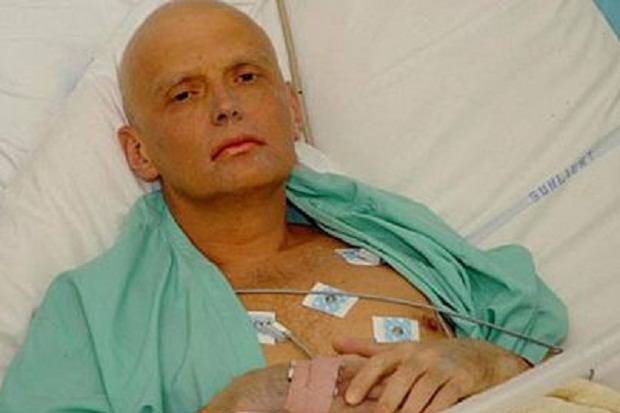
Polonium-Spuren bei Beresowski
By Sabine Rennefanz
29 November 2006
Berliner Zeitung
LONDON – Es war ein überraschender Fund. Im Fall des ermordeten russischen Ex-Agenten Alexander Litwinenko hat Scotland Yard jetzt im Büro des Milliardärs Boris Beresowski Spuren der Substanz Polonium 210 gefunden ..
A German newspaper article analysing the death of the former Russian spy Alexander Litvinenko, including an interview with Adrian Gatton about the poisoning, and how Russia’s rivalries are now played out on the streets of London. The comments draw comparisons with the mysterious death of the Menatep/Yukos lawyer Stephen Curtis in a helicopter crash in Dorset in March 2004, who had allegedly become a police informant and had been receiving death threats shortly before he died.

The Susurluk Legacy
By Adrian Gatton
Nov/Dec 2006
Druglink Magazine
Ten years ago, a horrific car accident grimly illuminated how Turkish state officials colluded with drug barons to traffic drugs into Europe and Britain. Adrian Gatton investigates how corruption has smoothed the path of heroin from Afghanistan into the UK.
ONE fateful evening, on November 3, 1996, a black Mercedes 600 pulled away from a plush Izmir hotel, and travelled towards Istanbul. Turkey’s roads are notoriously dangerous, and on the dark highway, near the town of Susurluk, the Mercedes smashed into an oncoming truck. Three of its four passengers died in the pile-up.
Photographs show blood-stained seats in a mangled wreck, the bonnet wrinkled-up and scorched by fire. Medics pulled out the bodies of an MP, a police chief, a beauty queen and her lover, a top Turkish gangster and hitman called Abdullah Catli. In the boot they found an assassin’s tools: pistols with silencers and machine guns, plus false diplomatic passports.
When the accident hit the papers, it emerged that Catli, a heroin trafficker on Interpol’s wanted list, was carrying a diplomatic passport signed by none other than the Turkish Interior Minister himself …
Full article available via Druglink magazine (a publication of Drugscope) or text version available here.
She looks like any ordinary woman in London, but at 30 this Kazakhstani is set to be the first female oligarch
By Keith Dovkants and Adrian Gatton
26 October 2006
Evening Standard
Borat, eat your heart out. This young woman, with her elegantly understated outfit and designer handbag, is about to prove the zany comedian has got it all wrong about Kazakhstan. Mounissa Chodieva, like everyone else from a Kazakh background who has had to endure Sacha Baron Cohen’s jokes, is poised to become Britain’s first woman oligarch.
Until now the oligarchs have all been men. Mounissa Chodieva is expected to join their ranks next year when her father’s huge mines and metals conglomerate seeks a listing on the London Stock Exchange.
If, as expected, the corporation is take public, it could command a market value of £3bn. Ms Chodieva, 30, plays an important role in the business, owns part of it and will become concomitantly rich, or, more accurately, even richer than she already is. To be a true oligarch, of course, she has to have a link to real power and, as we shall see, she satisfies that with ease …
Read the article about Mounissa Chodieva and the Trio from Kazakhstan here.
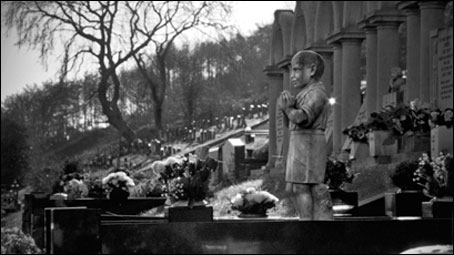
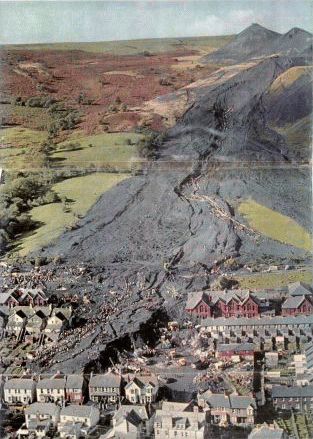
Aberfan: The Untold Story
BBC1
14 Sept 2006, 9pm
Documentary examining the tragedy which struck the Welsh mining village of Aberfan in 1966, when a mountain of coal slurry engulfed a school, claiming the lives of 116 children and 28 adults.
Aberfan was the world’s first televised disaster and at first the Prime Minister Harold Wilson’s Labour Government, and Lord Alf Robens of the National Coal Board, had seemed anxious to help. But their failure to understand the village’s plight awoke in this small mining community a sense of its own power.
Driven by grief, anger – and a sense of guilt – the village fought for justice.
Watch the film online here.
Producer: Adrian Gatton
Producer/Director: Jonathan Jones
Executive Producers: Samir Shah; Lucy Hetherington; Adrian Davies
Aberfan: The Untold Story is an independent production by Juniper TV for BBC1.
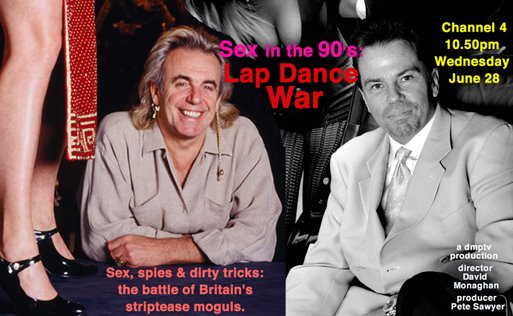
Sex in the 90s: Lap Dance War
28 June 2006
Channel 4 Television
Naked spies. Private eyes. Council-imposed underpants. A romp through the dirty war to control American-style striptease in Britain.
The 1990s saw the rise of lap dancing in Britain. Giant corporations opened strip clubs up and down the country, fundamentally changing British attitudes to sex. Lap Dance War tells the behind-the-scenes story of how lap dancing conquered Britain. It reveals the men behind the industry – like Michael J Peter, Peter Stringfellow and Spearmint Rhino’s John Gray – and their power struggles to dominate the scene. It is the story of backroom deals, lapdancing spies, and private detectives who re-wrote Britain’s rulebook for selling sex.
The programme features interviews with Michael J Peter, Peter Stringfellow, Mark Young and David Fierstone. The documentary also includes an interview with Adrian Gatton about his investigations into the lap-dancing wars (follow the links for some of the stories Spearmint Rhino lap-dancing clubs’ boss is convicted fraudster, Tale of the Rhino, A gangland killing, lap dancers who are said to sell sex and the criminal past of the man behind the Spearmint Rhino empire, Spearmint Rhino dances to £1.75m).
Consultant: Adrian Gatton
Producer: Pete Sawyer
Director: David Monaghan
Lap Dance War is a film by DMP. Read a transcript of Lap Dance War here.

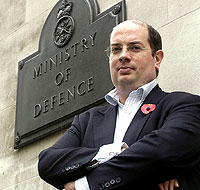

Dispatches: Battle Fatigue
22 May 2006
Channel 4 Television
With thousands of British troops now being sent to Afghanistan, Dispatches investigates whether the British army is losing the battle at home.
Andrew Gilligan (pictured) discovers disturbing new evidence of how wounded Iraq veterans are being abandoned, how army recruitment has collapsed and the lengths to which the Ministry of Defence has gone to prevent the full story emerging. Badly injured Iraq veterans recount shocking stories of neglect and the parents of a soldier killed earlier this year explain how their son’s death has prompted his friends to sign out of the Army.
In his first ever interview the Chairman of the British Armed Forces Federation tells Gilligan how his new, grass-roots organisation was formed in response to servicemen’s escalating woes.
Reporter: Andrew Gilligan
Director: James Bluemel
Producers: John Ashton, Adrian Gatton
Exec Producer: Stephen Phelps
These men flooded the UK with heroin. Now, the story of their strange deal with Customs
By Ian Cobain, Adrian Gatton and Michael White
28 March 2006
The Guardian
Members of an international crime gang were allowed to move to Britain while flooding the country with heroin because their leader had secretly worked as an informer for Customs & Excise, according to evidence brought before an immigration appeals tribunal.
The Baybasin Cartel, a notorious Kurdish gang, is estimated by police to have controlled up to 90% of the heroin which entered the country after its leading members settled in the home counties in the mid-1990s …

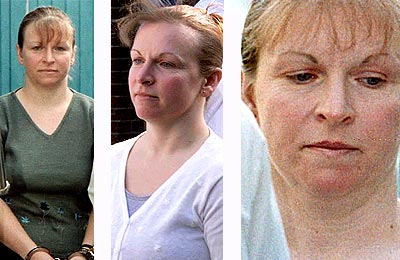
The Black Widow
Cutting Edge
Channel 4 Television
29 June 2005
“This woman is every man’s nightmare, the most dangerous woman I have ever met. For a decade she has targeted men sexually, financially and physically; they can sleep safe tonight knowing that she has been taken off the streets.” – Sussex Police statement.
In December 2003, Dena Thompson was convicted of murdering her husband by poisoning. Sussex Police had uncovered a long career of deceit, fantasy, fraud, theft and bigamy. Through the harrowing accounts of those she deceived, this film tells the incredible story of how one woman wrecked the lives of so many men.
Producer: Adrian Gatton
Director: Martin Herring
Executive Producer: Nina Davies
“a riveting documentary” – The Sunday Times
“fascinating” – The Financial Times
“gripping” – The Times
“scary” – The Observer
“an extraordinary tale” – The Guardian
 Adrian Gatton